


The skin, our largest organ, is prone to blemishes, including spots, not only on the face but also on the back. Acne on the back, also known as back acne or simply pimples on the back, can not only affect your aesthetic appearance, but can also affect your self-confidence. In this comprehensive guide, we will take an in-depth look at the development of spots on the back, the causes, effective care routines, preventative measures and possible home remedies.
How do pimples form on the back?
Pimples on the back – what to do?
What skin care helps against pimples on the back?
Frequently asked questions about back acne
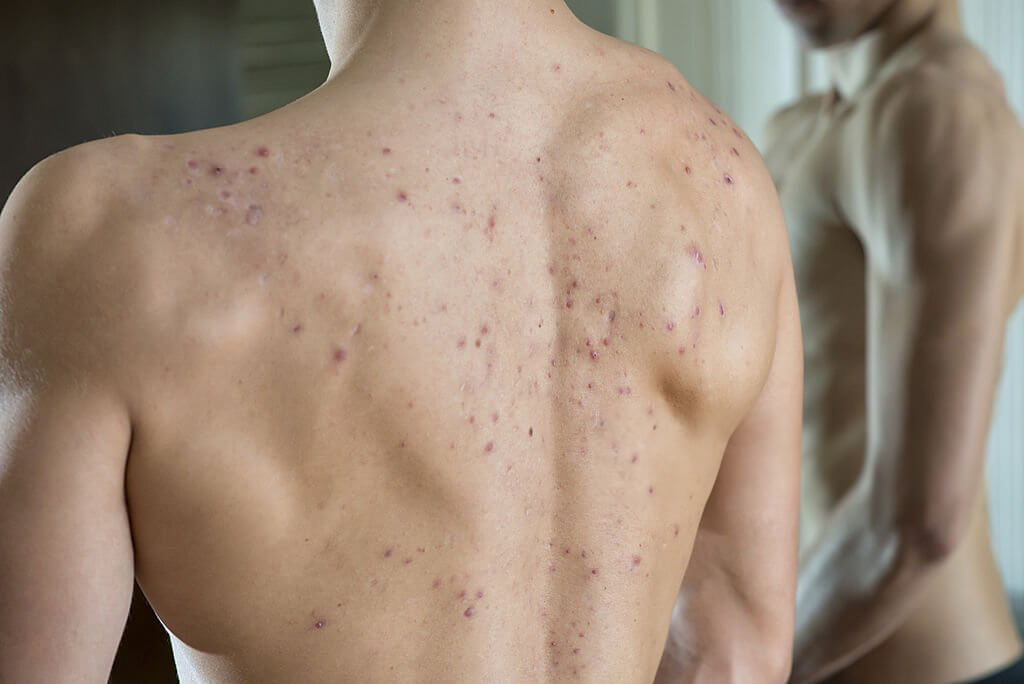
Back pimples are a common phenomenon. People who suffer from facial blemishes in particular are often confronted with the problem of acne on the back. This is because there are as many sebaceous glands on the shoulders and back as on the face, which encourages the formation of blackheads and spots. However, one striking difference is that back pimples are often larger than their facial counterparts, due to the larger pores in the upper part of the torso.
Pimples on the back develop in the same way as on the face: overactive sebaceous glands produce too much sebum (seborrhea), causing excess sebum to clog the pores. This process is often accompanied by an increase in the production of horny cells (hyperkeratosis) and keratinization occurs because the skin does not desquamate sufficiently. This is how blackheads, also known as comedones, develop, as the secretions from the sebaceous glands cannot drain properly and accumulate under the skin. In this environment, bacteria such as Propionibacterium acnes find a suitable breeding ground and can cause visible inflammation in the form of pimples.
Pimples on the back can be triggered by various factors and it is crucial to understand the underlying causes in order to take effective countermeasures and promote clear skin. Some of the most common triggers for pimples on the back are:
It is important to consider these causes and change potentially harmful habits to improve skin health. A regular skincare routine that is tailored to the individual needs of the skin can also help to reduce spots on the back.
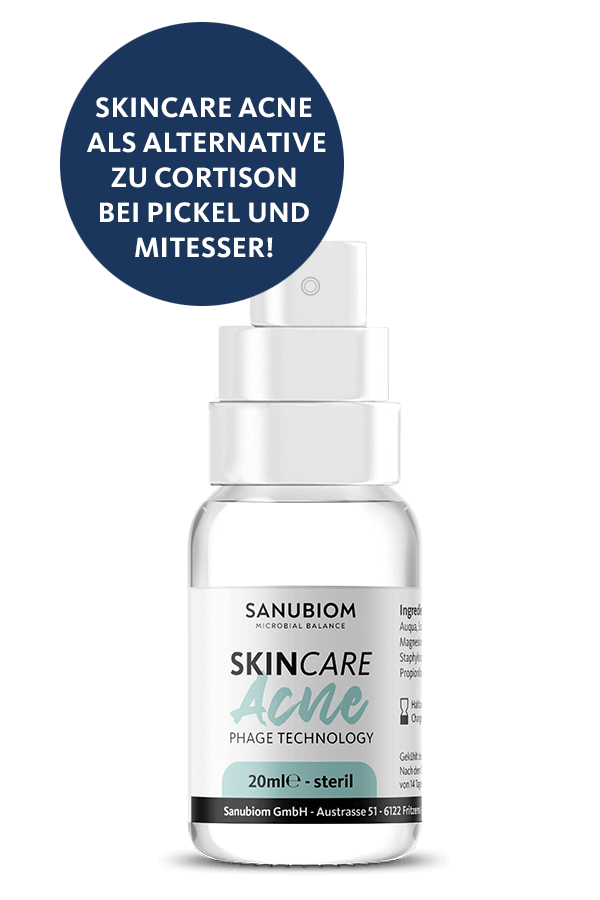
SKINCARE ACNE
Probiotic skin protection SkinCare Acne with Phage Technology.
Your skin comes to rest.
Caring for the skin on your back requires a special routine to prevent the formation of spots and treat existing blemishes. Here are some tips:

Choosing the right clothing plays a crucial role in preventing spots on the back. Opt for breathable fabrics such as cotton to promote air circulation and minimize friction.
A balanced diet plays a crucial role in improving our skin health and contributing to a radiant complexion. To support your skin optimally, your diet should contain a colorful variety of foods that are rich in antioxidants, vitamins and minerals.
Incorporate fresh fruits and vegetables into your diet, especially those with vibrant colors such as berries, spinach, carrots and broccoli. These foods not only provide a wealth of antioxidants, but also essential vitamins that can protect your skin from harmful environmental influences.
At the same time, it is important to reduce the consumption of sugary and fatty foods. An excess of sugary products can not only lead to skin blemishes, but can also affect the natural production of sebum. High-fat foods should be consumed in moderation, as they can impair skin elasticity.
Don’t forget to drink enough water to hydrate your skin from the inside out. Good hydration helps to keep the skin supple and promotes the elimination of toxins.
By consciously paying attention to a balanced diet, you lay the foundation for healthy skin from the inside out. Combined with a suitable skincare routine, you can achieve a radiant and youthful complexion.
Hormonal fluctuations can trigger pimples on the back. Discuss possible hormonal imbalances and their effects on your skin with a doctor.
Reducing stress is not only important for general well-being, but also for skin health. Find certain relaxation techniques such as yoga, meditation or walks in nature to reduce stress.

Choosing the right skin care products is crucial. Products containing salicylic acid, benzoyl peroxide or soothing ingredients such as aloe vera can help to treat pimples on the back. Consult a dermatologist to find the best products for your skin type.
SKINCARE ACNE
Probiotic skin protection SkinCare Acne with Phage Technology.
Your skin comes to rest.
Author: Christian Unterlechner, Dipl.-Ing. (FH), MBA
“From our own experience with neurodermatitis – and the long path of suffering associated with skin conditions like this – we started to look for alternative solutions to drug treatments. We are very happy to share the knowledge and experience that has gone into the years of developing our SkinCare products with you.”
Share post


